
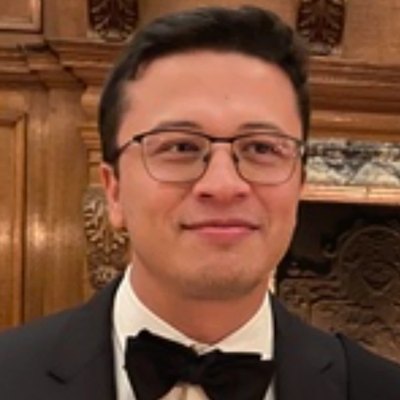
İsmail İlkan Ceylan
Principal Investigator
Generative models that account for the structure of data and the objectives of generation, from language and molecules to scientific dynamics and reasoning.
We develop generative models that account for both the structure of the data and the objectives of generation. Our work combines flow matching and diffusion with ideas from geometry, topology, and optimal transport, with applications to language, molecular design, biological sequences, scientific dynamics, and reasoning.
Much of our work concerns discrete data, such as text, molecular graphs, and DNA sequences. Rather than generating tokens directly, we represent discrete objects through probabilities over their categories, which turns generation into a continuous process on the probability simplex. This brings the tools of continuous generative modelling to discrete data: geometry gives a principled way to move between distributions (↓), flow maps make it possible to generate in one or a few steps (↓), and existing guidance techniques can be reused to steer sampling towards downstream objectives.
We also study how the structure of a domain should shape generation. Flows can incorporate the topology of the underlying domain, accounting for relationships in signals such as brain activity on graphs (↓). In scientific dynamics, combining population snapshots with approximate velocity information makes it possible to learn circulating and periodic behaviour, such as the cell cycle (↓).
Another focus is controlling what a model generates. We study how the coupling between noise and data affects generation under classifier-free guidance (↓), and develop methods that steer pretrained models during sampling, for instance using persistent homology to encourage the formation of large molecular rings and generate macrocycles (↓). We also explore how objectives stated in natural language can be distilled into a pretrained generator, using a language model as a teacher (↓).
Finally, we view generative processes as a framework for reasoning. Training recurrent computation through denoising objectives allows a model to spend more computation at inference time and to explore several candidate solutions from different initial noise samples (↓). Ultimately, we aim to build generative models that are principled, efficient, and controllable, and to use them to accelerate scientific discovery.
Principal Investigator
PhD Student
PhD Student
PhD Student
PhD Student
PhD Student
In arXiv preprint
October 2026
In arXiv preprint
October 2026
In arXiv preprint
September 2026
In ICML 2026
July 2026
In ICML 2026
July 2026
In ICLR 2026
April 2026
In NeurIPS 2025
December 2025
In NeurIPS 2024
December 2024